Nucleon Engine is a game engine and editor for making 2D and 3D games, from small projects to large open worlds, with a Direct3D 12, Vulkan and OpenGL renderer, Lua scripting, and an editor that an AI assistant can drive. This page lists what is in it, grouped the way you work: render it, build the world, make it in the editor, script it, make it play.
The renderer, the editor and the tools are built in-house and designed to fit together. Open-source libraries cover the parts that are best shared: Jolt for 3D physics, Box2D for 2D physics, SDL3 for windows and input, Lua for scripting. The full list is on the legal page.
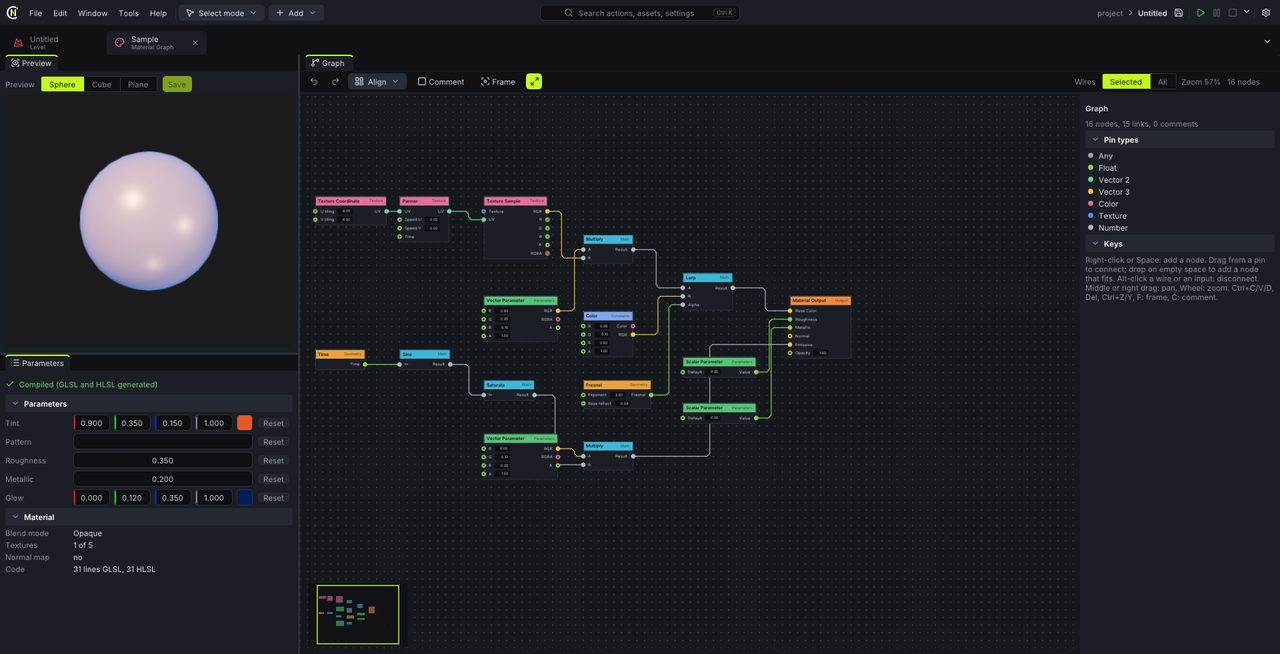
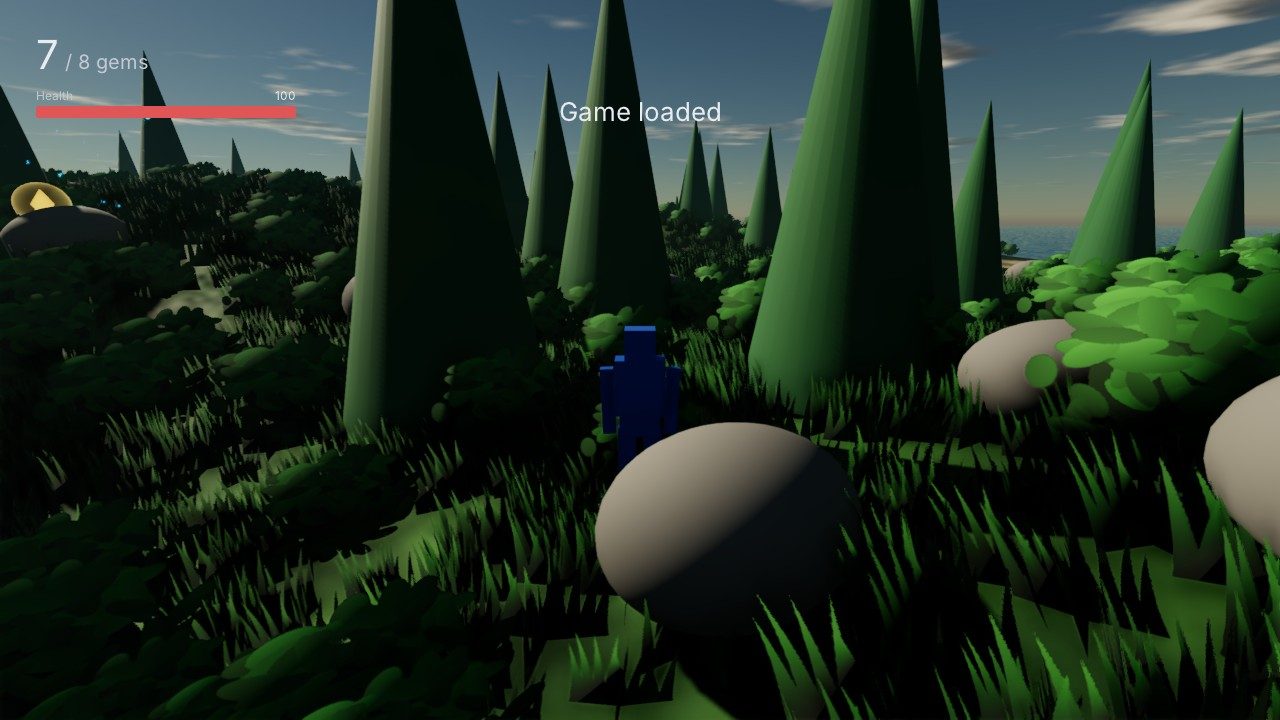
Physically based materials and a node-based material graph. Clustered point, spot, directional and area lights. Cascaded and virtual shadow maps. Dynamic global illumination and reflections that do not need ray-tracing hardware. Virtualized geometry for heavy meshes. Sky, volumetric fog and clouds, water, foliage, decals and a full post-process stack, with five quality presets from Low to Cinematic.
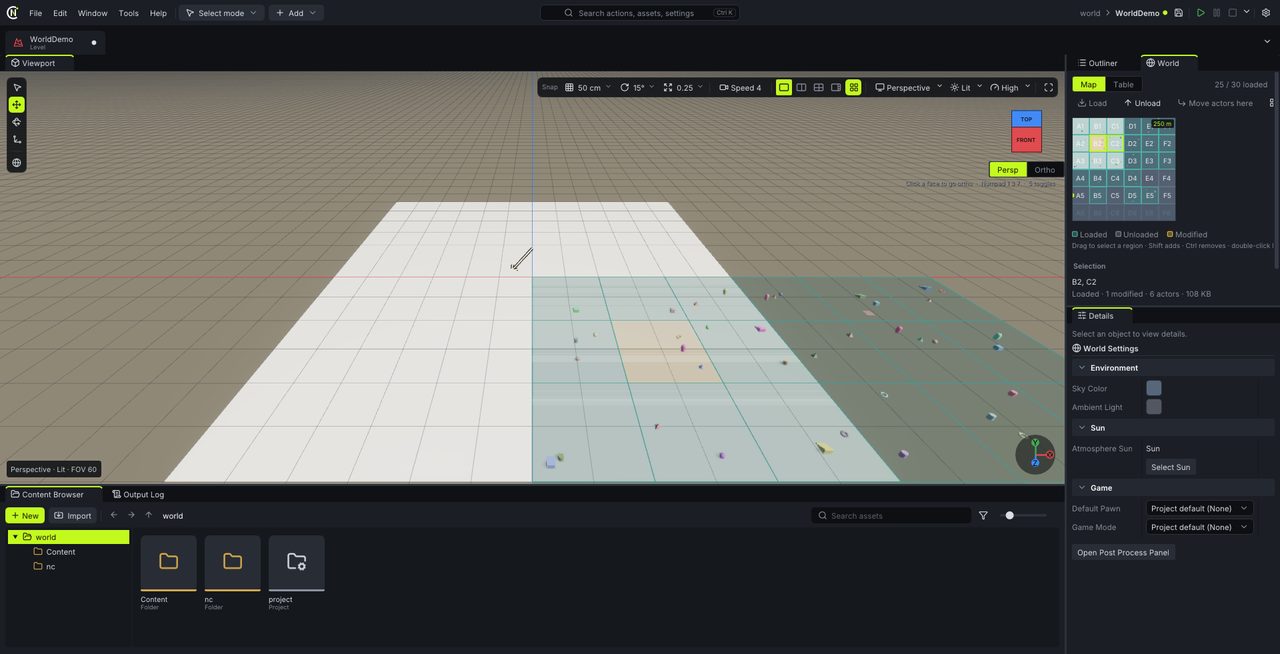
A world cut into cells that stream by distance, packed cells, asynchronous loading with an I/O scheduler, HLOD for far cells, far terrain, large-coordinate support, and landscape tools to sculpt, paint, erode and plant. Designed to scale to AAA-style open worlds.
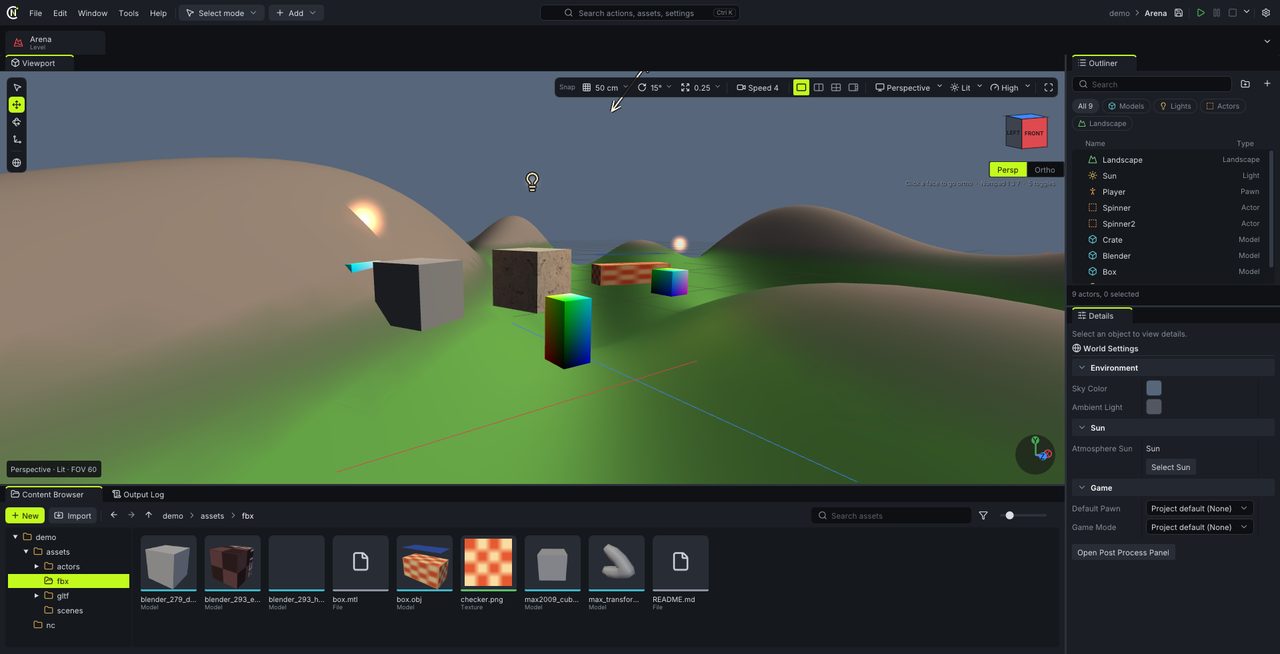
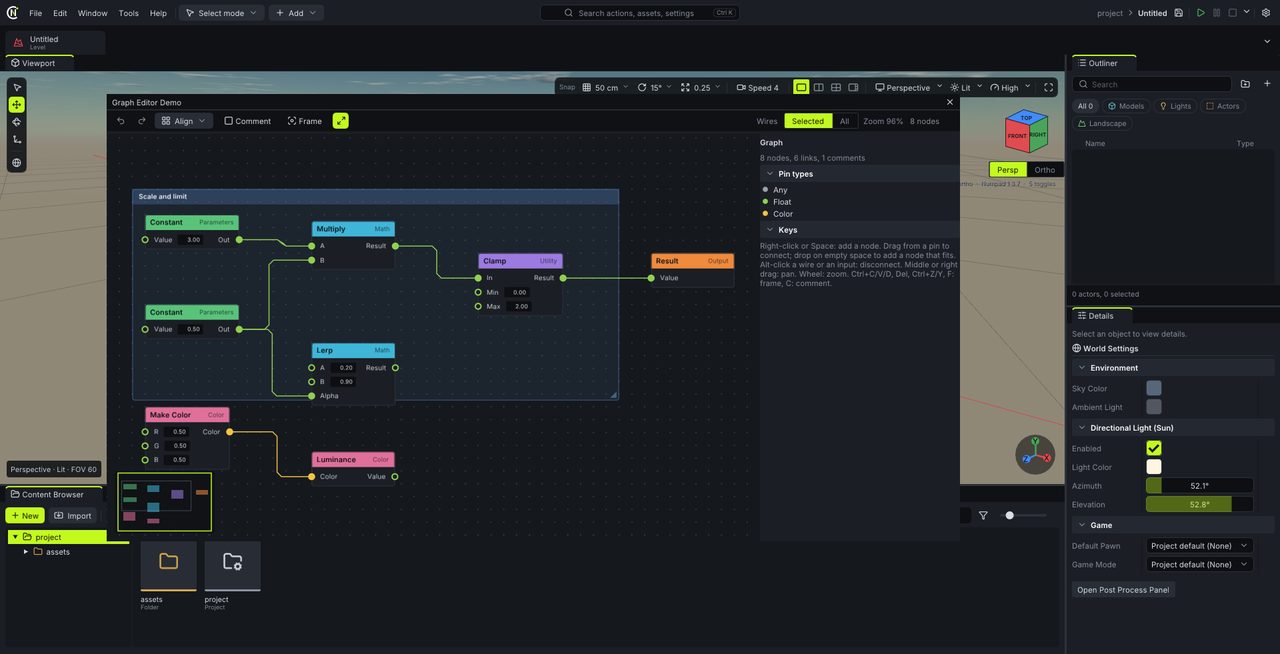
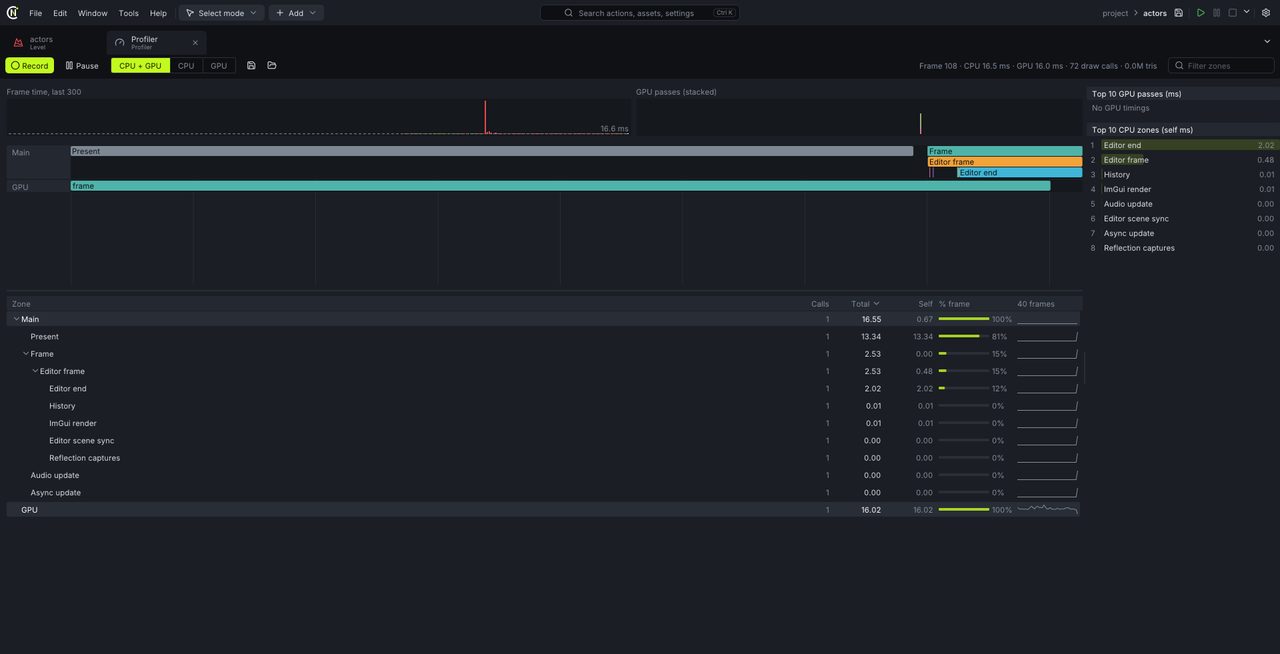
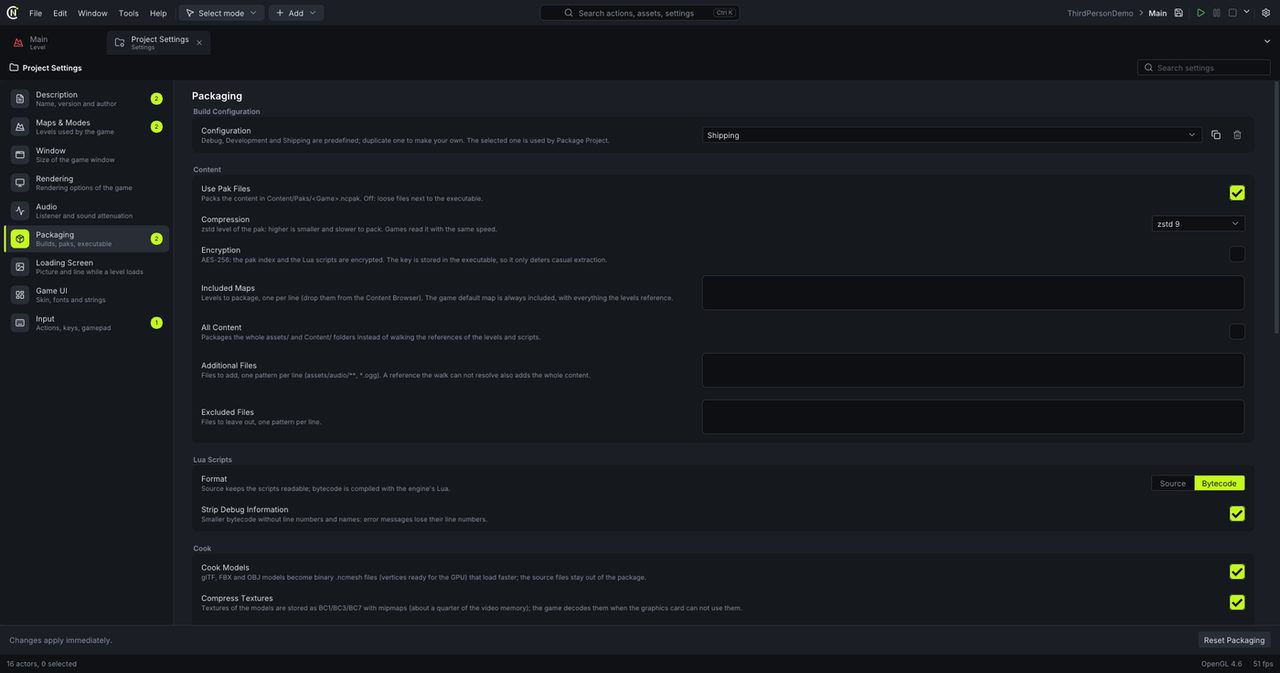
Level, actor, material, animation, UI and curve editors, Sequencer cinematics, landscape, foliage and modeling modes, a profiler, Feature Toggles, Play In Editor with several players, git source control and one-click packaging.
Lua 5.4 with hot reload, a console, component scripts and a generated API reference. A built-in MCP server and a command line let an AI assistant or a script build, change and test a project.
Jolt physics with a character controller, skeletal animation with graphs, IK and retargeting, 3D audio, navigation meshes and behavior trees, input actions for keyboard, mouse, gamepad and touch, save games, an HTML game UI, and server-authoritative multiplayer (in testing).
Screenshot to comeA 2D platformer level in the Nucleon Editor 2D view.
A dedicated 2D renderer with sprites, layers and a pixel-perfect camera, a sprite editor, tile sets and tilemaps, Box2D physics, 2D lights and shadows, particles, tweens and a native canvas UI, in the same editor as 3D.
Windows and Linux, Direct3D 12 first with Vulkan and OpenGL backends, packaging, and a dedicated server in testing.
Open formats and plain-text projects
Models stay glTF, FBX and OBJ. Pictures stay PNG, JPG, TGA and DDS. Sounds stay WAV and OGG. Levels, actors, materials and animations are Lua tables in text files that people, git and assistants can read and edit.
Start from a template
Eight project templates for 3D and 2D give you a working level, a pawn and the settings for that kind of game. A complete sample game is walked through step by step in the manual.