
 Nucleon EngineA game engine for every size of game.
Nucleon Engine is a game engine and editor for making 2D and 3D games, from small projects to large open worlds, with a Direct3D 12, Vulkan and OpenGL renderer, Lua scripting, and an editor that an AI assistant can drive.
Read the documentation- Direct3D 12, Vulkan and OpenGL
- Lua 5.4 scripting
- 2D and 3D in one editor
- Windows and Linux
What is Nucleon Engine?
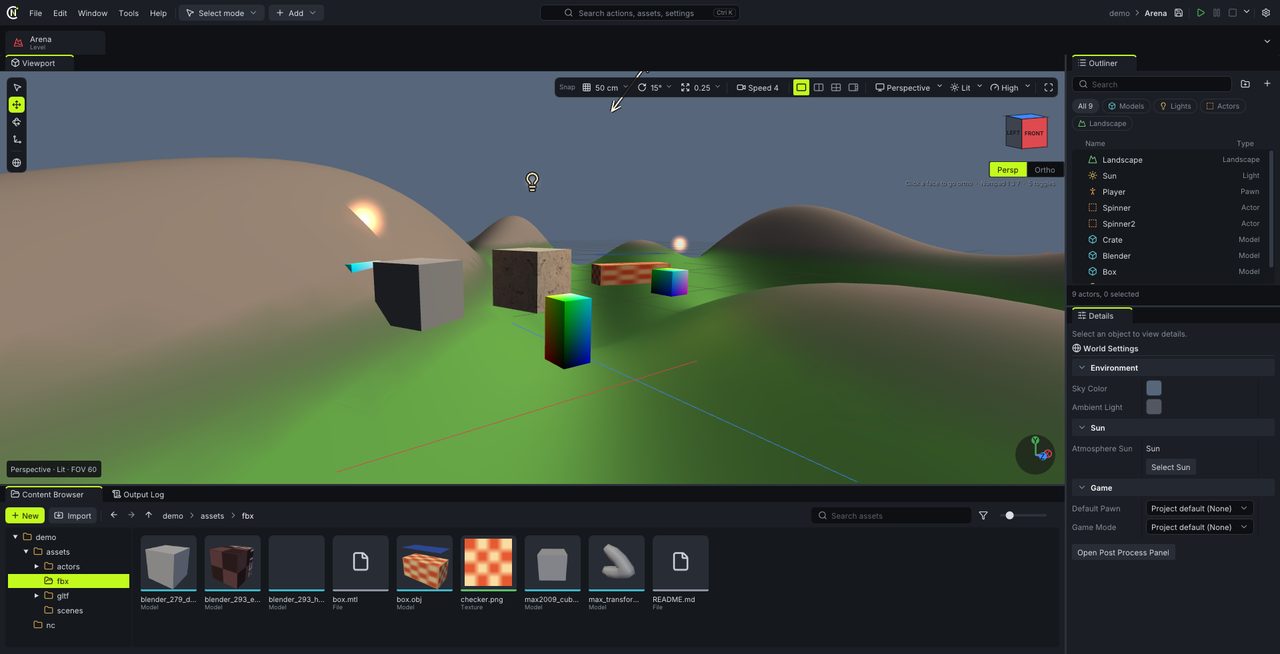
Nucleon Engine is a complete engine and editor in one package. You import models, textures and sounds, build levels in the Nucleon Editor, script behaviour in Lua, test with Play In Editor, and package the game for Windows or Linux.
The renderer, the editor and the tools are built in-house. They sit on well-known open-source libraries for the parts that do not need reinventing, such as Jolt for 3D physics, Box2D for 2D physics, SDL3 for windowing and input, and Lua for scripting.
Project files are plain text. A level, an actor and a material are Lua tables you can read, diff in git and hand to an assistant.
Everything a game needs, in one place
3D rendering and lighting
Physically based materials, clustered lights, virtual shadow maps, global illumination that does not need ray-tracing hardware, and virtualized geometry.
3D rendering and lighting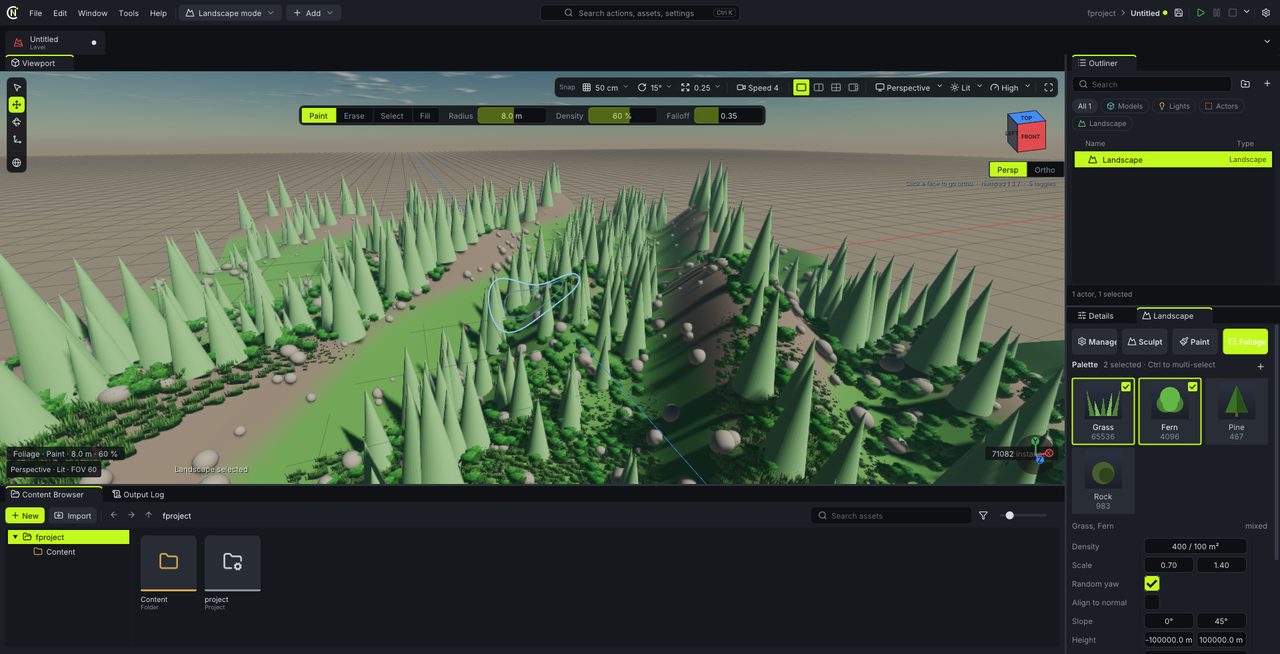
Open worlds and streaming
Cell-based world streaming, HLOD for distant cells, landscape sculpting and painting, and far terrain, built for big maps.
Open worlds and streaming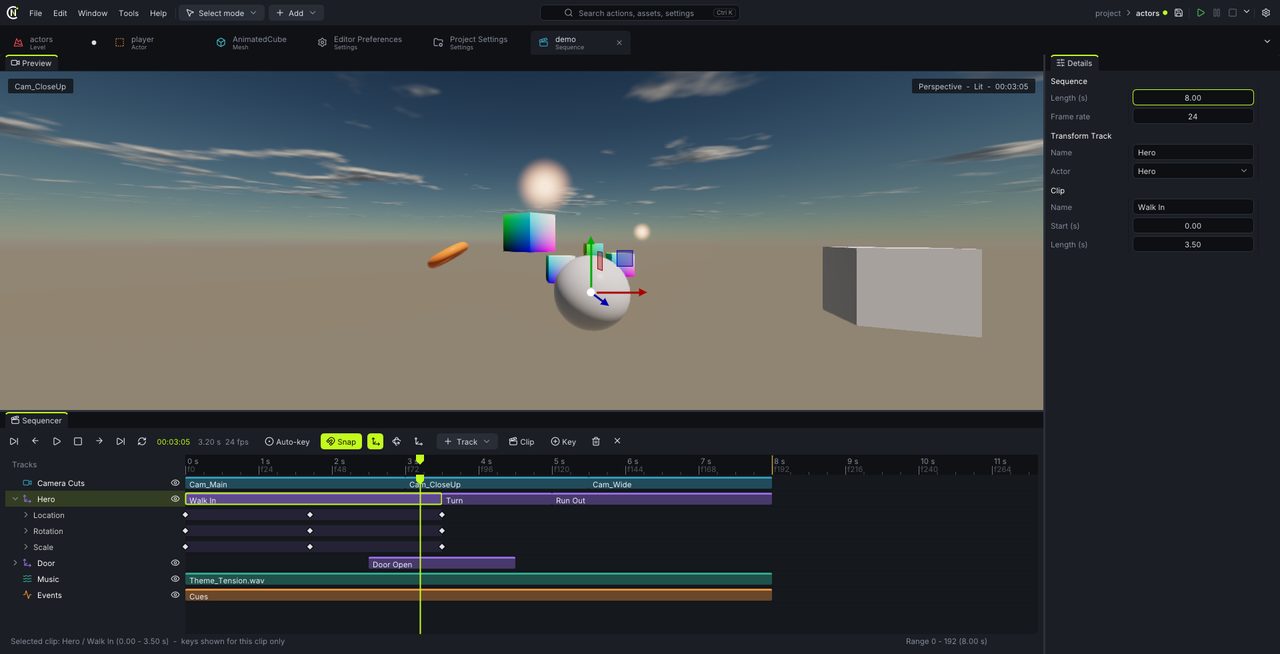
Nucleon Editor
Level, actor, material, animation, sequencer and UI editors, landscape and foliage tools, a profiler and Play In Editor, all in one docked workspace.
Nucleon Editor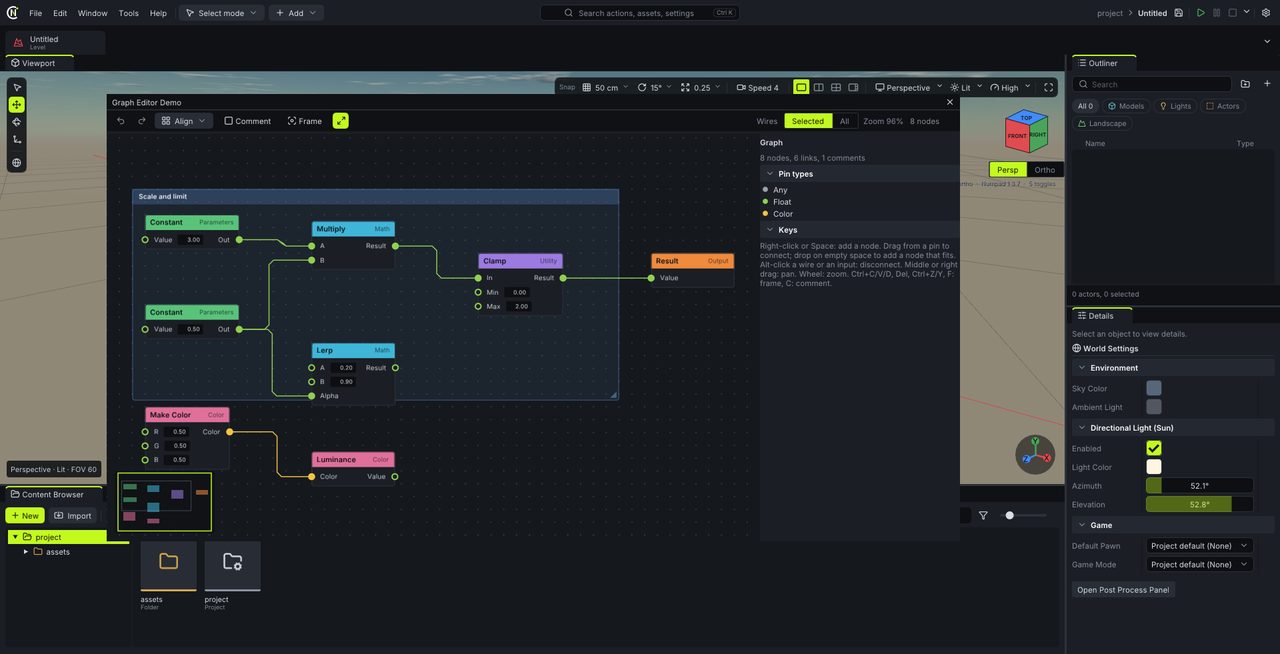
Lua scripting and AI tools
Lua 5.4 with hot reload, component scripts, a command line, and a built-in MCP server so an AI assistant can build and test levels in the editor.
Lua scripting and AI tools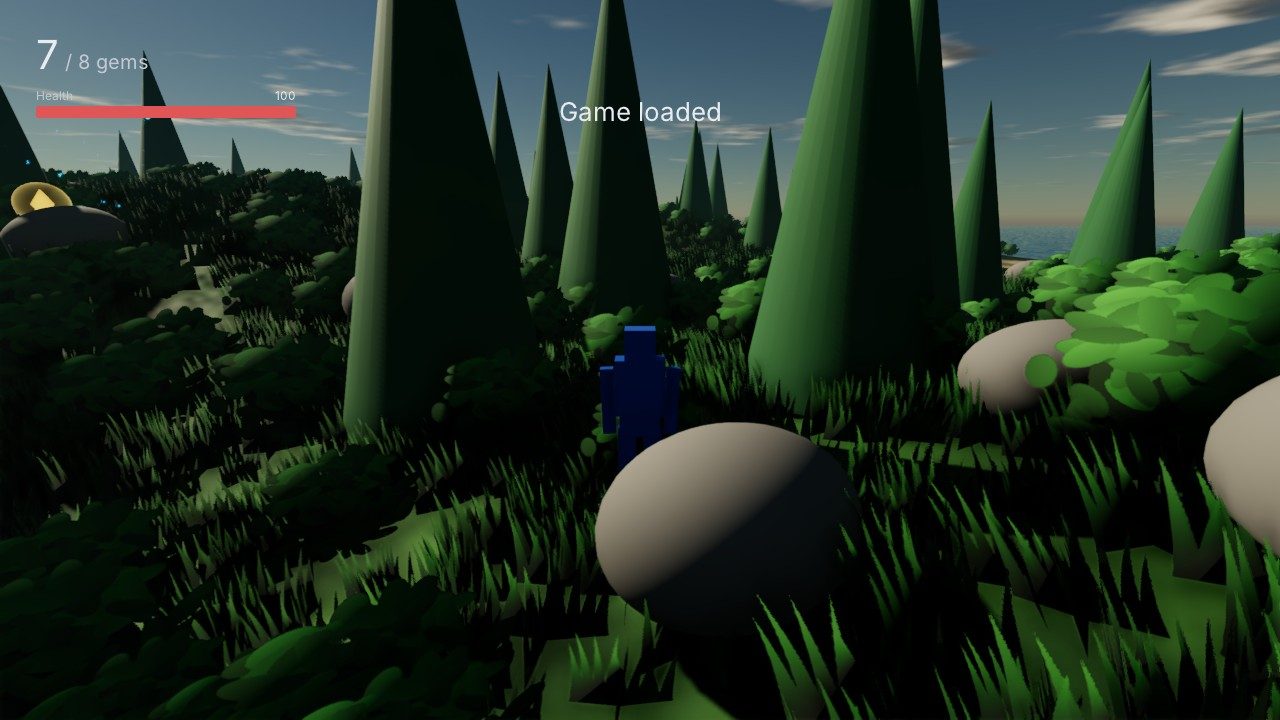
Gameplay systems
Jolt physics, skeletal animation, 3D audio, navigation meshes, behavior trees, saves, an HTML game UI and server-authoritative multiplayer (in testing).
Gameplay systems2D game engine
A dedicated 2D renderer, sprite and tile editors, Box2D physics, 2D lighting and a native canvas UI, in the same editor as 3D.
2D game engineFrom small 2D games to large open worlds
You should not have to change engines when a game grows. Nucleon is one engine with one editor from the first sprite to the last streamed cell.
A small game, light and fast to start
Start from an empty project or a template. A 2D project runs on its own 2D renderer: the 3D renderer never starts, so a small game stays small and cheap to run. Platformer, top-down RPG and 3D first-person, third-person and top-down templates are included.
Everything in between
Five quality presets, from Low to Cinematic, scale a 3D game to the machine it runs on. Upscaling, dynamic resolution and a built-in profiler help you reach the frame rate you want.
A large open world
Cell-based streaming, HLOD, far terrain, virtualized geometry and large-world lighting are designed to scale to AAA-style open worlds. Nucleon’s own test world is a 4 km by 4 km streamed map.
Built in-house, built to fit together
Nucleon is not a wrapper around other tools. The core systems are written for it and share one data model, so they work together without glue code.
A renderer built around one interface
One render interface sits over Direct3D 12, Vulkan and OpenGL. Shaders are written once in HLSL and run on all three. A render graph handles barriers and resource lifetime.
Virtualized geometry
Heavy meshes are cut into clusters and the GPU picks the detail for each cluster. Qualifying static meshes use it by default, cooked once into a cache.
A streaming world runtime
Worlds are cut into cells that load by distance and velocity on worker threads with an I/O scheduler, so loading does not stall the frame.
An editor and a tool surface built together
The same operations power the mouse, the command line and the MCP server, so what you do by hand an assistant can do by tool call.
An editor an AI assistant can drive
Nucleon Editor includes a Model Context Protocol (MCP) server. It is off until you turn it on. When it is on, an MCP-compatible AI assistant can read and change the open level, create actors and components, edit materials and 2D assets, run builds, start Play, read the log and capture screenshots. The connection stays on your own computer, and changes to the level go through the editor’s undo history, so you stay in control.
If you prefer scripts, the same editor has a command line for one-shot jobs such as packaging, baking navigation, building HLOD and rendering a movie.
Lua scripting and AI toolsThe details that matter day to day
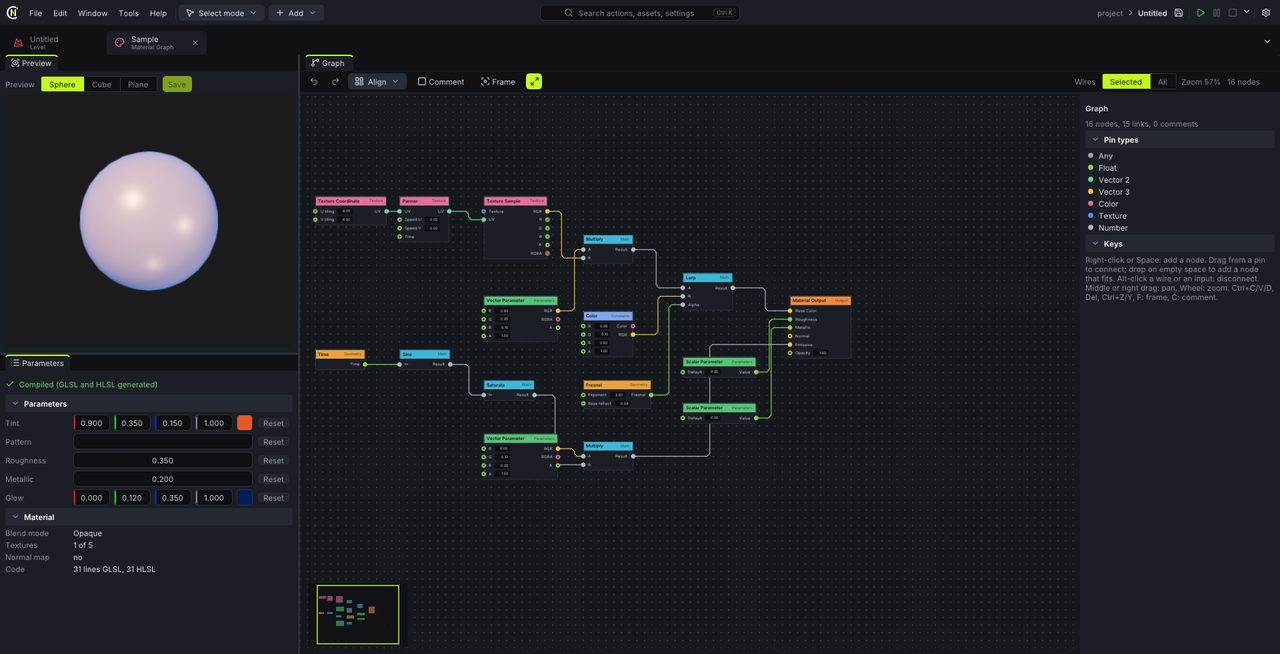
Material graph
Build materials from nodes and see them live on the model.
Landscape tools
Sculpt, paint layers, erode, lay splines and paint foliage.
Play In Editor
Test with several players and a camera you can eject.
Sequencer
Author cinematics as assets and render them offline.
Profiler
Capture a frame, read CPU next to GPU, and toggle features to see what each costs.
Open formats
glTF, FBX and OBJ models; PNG, JPG and DDS textures; WAV and OGG sound; Lua text for the rest.
Packaging
Cook assets and ship encrypted archives, for Windows and Linux.
Localization
String tables with plural forms and per-culture formats.
Start from a template
Project templates for 3D and 2D.
- Empty 3D
- First Person
- Third Person
- Top Down
- Terrain
- Empty 2D
- Platformer 2D
- Top Down RPG 2D
A complete sample game (Island of Gems, a third-person game with a landscape, a skinned hero, an enemy, a game UI and a cinematic) is walked through step by step in the manual.
Quick answers
What is Nucleon Engine?
Nucleon Engine is a game engine and editor for making 2D and 3D games, from small projects to large open worlds. It has a Direct3D 12, Vulkan and OpenGL renderer, Lua scripting, and Nucleon Editor, an editor that an AI assistant can drive. Its renderer, editor and tools are built in-house.
Can I make 2D games with Nucleon Engine?
Yes. A 2D project uses a dedicated 2D renderer and never starts the 3D renderer. It includes a sprite editor, tilemaps, Box2D physics, 2D lights and shadows, particles and a native canvas UI. Templates include a platformer and a top-down RPG.
What language do I script in?
Lua 5.4. Scripts hot reload while the game runs, component scripts attach behaviour to objects, and the engine's own runtime modules are Lua too. Game screens are written in HTML, CSS and JavaScript.
When can I download Nucleon Engine?
Downloads are not open yet. The Download page explains how to be told when they open, and the documentation is already online at docs.nucleonengine.com.
Build with Nucleon
Nucleon Engine is on its way to you. Downloads open soon; the documentation is already online.